By December, the dog hair on your couch stops being dirt and starts being upholstery — a felted layer that vacuums shrug off and tape rollers wage a losing, sticky war against. The reason is physics: shed undercoat is barbed, sofa fabric is woven to grip, and everyday movement presses one into the other. Here's how to actually win, surface by surface.
Why pet hair clings so hard
Three forces are working against you. Static holds loose hair flat against fabric until it weaves in. Barbs — microscopic scales on undercoat fibers — catch on weave intersections like burrs. And mechanical packing: every time a human sits, the hair is pressed deeper. That's why a vacuum's suction alone fails — it's fighting packed barbs with airflow, and airflow loses.
The winning principle is to gather before you remove: use friction and direction to clump hair into something liftable, then lift. Every method below is graded by how well it does that without eating your afternoon — or your wallet.
The household methods, honestly ranked
Rubber glove, slightly damp (7/10): dish gloves swept over cushions ball hair into clumps shockingly fast. Works; costs almost nothing; wets your sofa a little and takes a sink rinse after. Window squeegee on carpet (8/10): drag it across pile and it combs undercoat out in visible rows — the best carpet trick going, but it's a two-tool job (squeegee plus vacuum) and awful on stairs. Pumice stone on upholstery (6/10): lifts hair off tight-weave sofas, but it can snag loose weaves and needs gentle pressure — spot-test or skip. Damp sponge (4/10): collects hair, surrenders it to the sink, gets destroyed monthly. Sticky tape rollers (5/10): genuinely work — until you've bought your ninth refill pack and understand you're renting the solution forever.
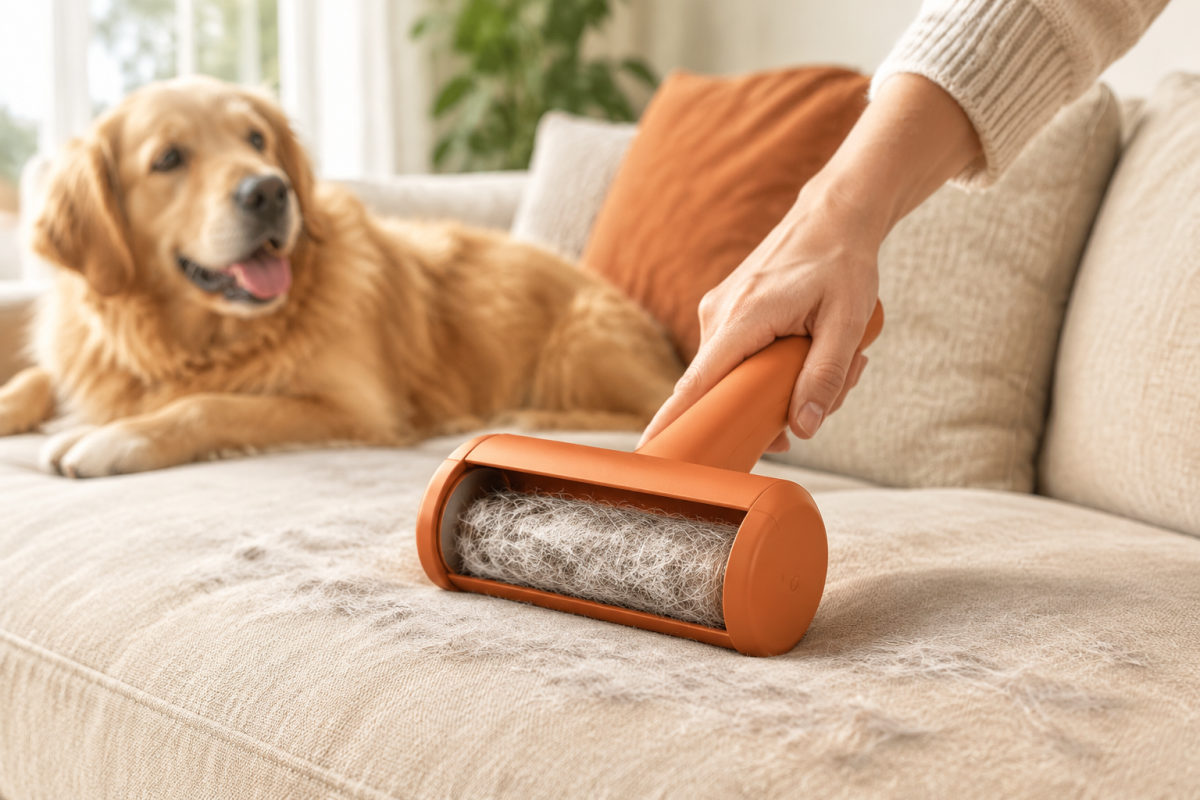
What you actually want is the rubber-glove gathering power with no water, no refills and one tool: an electrostatic reusable pet hair roller — the silicone blade charges as it strokes, holds the hair, and dumps it out in one felt sheet when you push it through the self-clean chamber. One purchase, done.
The five-minute couch routine
Work top to bottom so falling hair gets collected once: back cushions first, seat cushions, arms, then the base and any throw. Roll in short strokes, one direction — the long sweeping strokes people default to are what pack hair deeper. Ten seconds per cushion panel, empty the chamber between panels when full, and finish any damp-look patches by going over them again once dry. A whole three-seater is genuinely five minutes if you don't let it slide past a week.
On loop-pile fabrics (chenille, fleece, faux-fur throws): dampen a rubber glove, clump the worst of the hair, pick the clumps off by hand, then run the roller over what's left. On leather, skip all of it — a microfiber cloth and the roller's edge for seams.
Carpets and rugs without renting a machine
Squeegee first, vacuum second — never the reverse. Rows of combed undercoat disappear into the vacuum in one pass; vacuuming packed pile just polishes the mat. Runners and small rugs: take them outside, stripe them hard with a stiff broom while they're flat on a railing, then shake — a dry bathtub cycle works for machine-washable ones (clean the lint trap after, seriously). Edges and stair noses, where the squeegee can't reach, are the roller's job.
The car: the one trip that ruins a clean house
Dog hair in a car is a layer problem: seats and the cargo area collect it fast because vibration presses it in with every turn. The fix is a washable waterproof seat cover — hair stays on the cover, the cover shakes out in thirty seconds — plus the roller for the seat edges, pedal wells and any corner the cover doesn't reach. Cloth headliners shed their hair upward in sun and static; a dry roller works them gently, always one direction.
Halve the mess at the door
Every hair stopped at the entrance is ten seconds of rolling you'll never do. Two habits: wipe-or-wash paws on an absorbent entry paw mat after every walk (mud-caked hair is the one that mats furniture), and one five-minute weekly pass with a bath brushing tool over the dog's coat — the undercoat you brush out Sunday never becomes Monday's couch tapestry. Prevention is not a replacement for the roller; it's what keeps the routine at five minutes instead of fifty.
Common questions
How often should I remove pet hair from furniture?
Once a week for most shedding; twice a week through spring and fall blowouts. Frequent light passes take five minutes and stop the woven-in mat of hair that builds up when you wait a month — embedded hair is the only version of this job that's genuinely hard.
Will a reusable hair roller work on carpet?
On low-pile rugs and carpet edges, yes — it picks up surface hair without power. On deep-pile carpet, a rubber window squeegee worked across the pile beats everything: it drags the undercoat out in visible rows for the vacuum to suck up. Upholstery and cushions are the roller's home turf.
Do dryer balls and laundry catcher discs actually work?
They're assistants, not solutions. Wool dryer balls knock some hair loose from fabrics mid-tumble (your lint trap then wins), and microfiber catcher discs grab hair off clothes in the wash. Neither replaces ten seconds of rolling the couch before the laundry even starts.
Why is hair nearly impossible to get out of fleece and chenille?
Loop-pile fabrics physically grip every hair like tiny nooses. Brushes skate over them; tape costs a fortune. Slightly dampen a rubber cleaning glove and sweep the surface in short strokes — the hair balls up in clumps you can pick off by hand, then the roller finishes.
What's the fastest way to cut the overall hair problem?
Attack it at the door and at the source: a quick paw wipe and body brush on an entry mat stops mud-caked hair from ever reaching the sofa, and one five-minute brushing session a week removes the loose undercoat before it sheds onto furniture. Prevention beats even the best roller.
Recommended Gear: Reusable Pet Hair Roller — No Refills, Ever
Pick up dog and cat hair from couches, beds, and cars with one swipe — no sticky sheets, no refills, no waste.