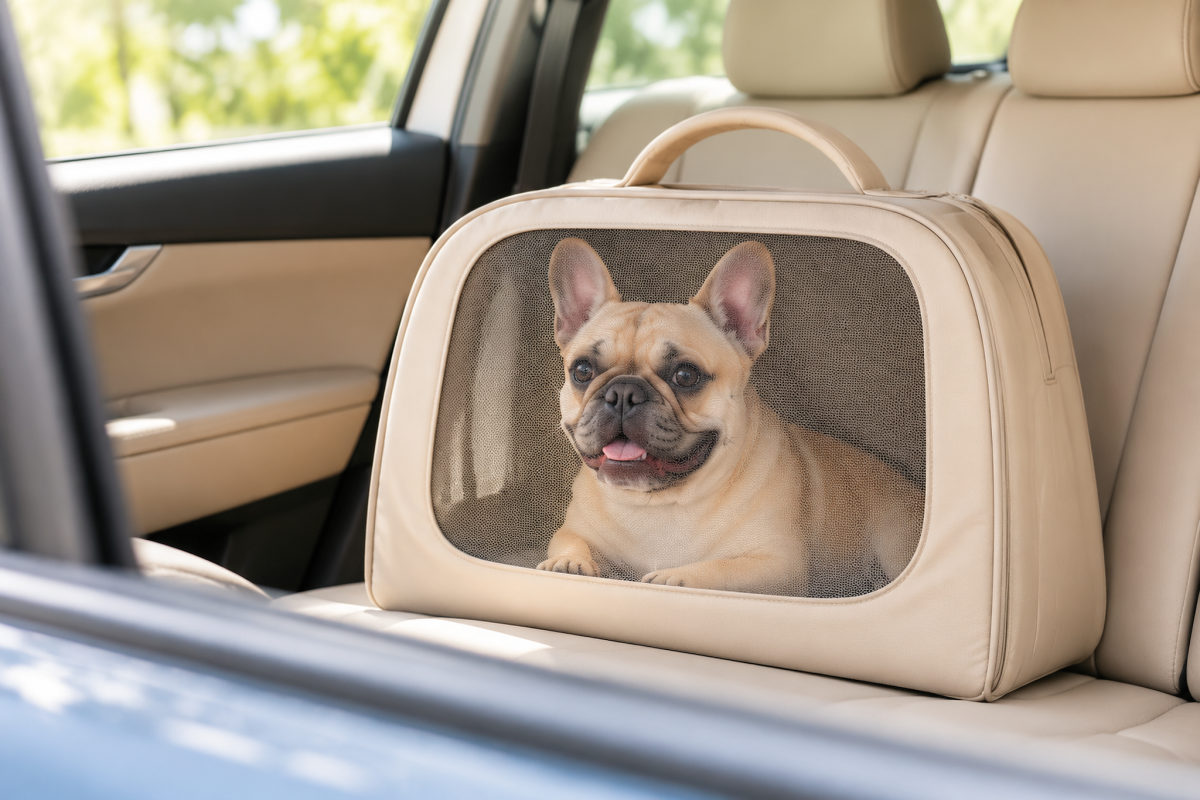
Every dog has a different relationship with the car. For some it is a nap machine. For others it is the most stressful fifteen minutes of their day. The trap most owners fall into is treating the car as the problem, when the car is usually the symptom: travel anxiety is built in the weeks before a trip, in small moments nobody noticed. This guide covers what travel anxiety actually looks like, the four triggers that are usually missed, and a calming plan that works in order — from the driveway to the departure gate.
If your dog's anxiety is broader than the car, start with our general dog anxiety guide first — the tools overlap, but the triggers are different.
What dog travel anxiety looks like (and why it is rational)
The signals are unmistakable once you know them: excessive drooling, panting in a cool car, trembling, whining or barking at nothing, pacing between the seat and the door, refusing to board, and escape attempts — which are a genuine safety issue, because a dog that bolts into the front seat or a parked-lane doorway is in real danger.
Here is the part owners miss: from the dog's side, the panic makes sense. The car removes every reference point a dog uses to feel safe — they cannot leave, cannot see where they are going, cannot predict why they are going, and they feel the vehicle's motion in their balance system. For many dogs the car has also historically meant one destination only: the vet. The car is a prediction machine for bad things. Fixing that prediction is the whole job.
One distinction worth making up front: if the main symptom is vomiting or heavy nausea, that is motion sickness — a physical issue that often coexists with anxiety but needs its own handling (food timing first, a vet for the rest). Anxiety is fear; sickness is a stomach. Your plan covers both when you know which one you are looking at.
The four travel triggers that are usually missed
1. The vet association. Even dogs that have only ever ridden to the vet inherit that association automatically. The car is not a neutral vehicle in their book — it is "the place where bad things start". This is the single most common root cause, and the reason generic "take the dog for a ride" advice fails: you are driving the dog toward more of the same trigger.
2. Motion sensitivity. Larger dogs experience the car's physics bigger — every pothole, every brake, the sway at the back of an SUV. A dog standing or lying on a loose seat, or held on a lap, absorbs the whole vehicle's movement. Unstable footing plus motion is a panic recipe. This is why "just hold them tighter" makes it worse.
3. The wrong restraint. A harness that is too tight, a carrier the dog cannot stand or turn around in, a crate that rattles like a drum — restraint that feels like a straitjacket converts a manageable ride into a prison. The goal is a restraint that feels like a seatbelt: secure, stable, and not squeezing.
4. The pre-trip routine. A hungry stomach (nausea), a full bladder (accidents plus stress), a hot car (drooling doubles), and a dog with no exercise to burn (a charged dog has a lower threshold for everything). Half of "suddenly anxious" dogs are actually just badly prepped for the trip.
Build a positive car association — starting in the driveway
The fix is ten parked-car sessions, and none of them involve driving:
- Sessions 1-5: car parked, dog in with a treat, five minutes, out. The car becomes a treat dispenser, not a vehicle.
- Sessions 6-8: add the seatbelt click. Buckled up, treats, engine still off. The click sound — which predicts the ride — gets paid for.
- Sessions 9-10: engine on, still parked. Then your first real drive: one block, ending somewhere good (the dog park, a favourite spot). Get out, celebrate, walk.
From session ten onward, work up in small steps: 5-minute drives, then 15, always ending in a good place. And keep the golden rule for the first few weeks: the car is for good things only. No vet trips during the training phase, even if one is due — book it mid-morning so the drive home is the "fun" one, or have the vet see the dog in the clinic while the car stays parked and boring.
The gear that helps mid-trip
Training changes the long-term association; gear manages the ride in front of you. Four layers, in order of usefulness:
- A den the dog already knows. A crate or carrier the dog has lived with at home for a week before travel beats any new piece of equipment. For smaller dogs, our under-seat carrier doubles as the in-car den — it is the same bag the dog will know from the plane, which is exactly the point.
- Proper restraint for dogs that don't crate. A well-fitted harness clipped to the seatbelt anchor gives a large dog stable footing — which directly addresses the motion-sensitivity trigger. The fitting guide covers the two settings that matter for car use.
- An occupied mouth. A frozen lick mat on the tray table or window is the single most effective in-ride tool we know: licking is a self-calming behaviour, and the food keeps the brain busy for the length of the drive.
- Pressure, for the sensitive ones. A calming vest settled for five to ten minutes at the start of the ride covers the highest-anxiety window. It is a layer, not a fix — honest about that, and it works best stacked on the other three.
Logistics close the list: last meal two to three hours out, water stops every 45-60 minutes, the car pre-cooled before the dog gets in, and a pee pad in the back for the first few trained drives (accidents happen; the pad makes them non-events).
Flying in-cabin: what "under-seat" actually means
Air travel raises the stakes because nothing about the situation is controllable at 30,000 feet: no exits, no windows for most of the flight, a closed space. That is precisely why the carrier matters more on a plane than in a car — it is the one constant the dog can hold onto.
- The dimensions are firm. Each airline publishes exact under-seat limits, and they differ. Measure the dog, pick the bag, then verify against your airline's numbers before booking — a bag that fits one carrier will not necessarily fit another.
- A week before: the bag becomes home. Leave the carrier open in the dog's favourite room, meals inside it, naps in it. Flight day, the bag is not a new object — it is the den from the last seven days.
- Flight morning: a short walk before security, no food after that, the carrier straight through (most airlines allow the dog's head out during the scanner — confirm with yours), a familiar-smelling towel inside, and zero forced interaction with other passengers' dogs in the cabin.
When travel anxiety needs professional help
Bring in the vet when: motion sickness persists despite food-timing changes (anti-nausea medication exists and works); escape attempts injure the dog or put the driver at risk; fear-based aggression appears; or the anxiety appeared suddenly in a dog that used to enjoy rides — sudden onset is a medical workup first, because pain presents as fear. For severe flight cases, short-acting anti-anxiety medication prescribed by a vet is common and legitimate; its job is to lower the panic enough that the training in this guide can actually take hold. A certified behaviourist is worth the one session if the parked-car method stalls after a month.
Common questions
Why does my dog only get anxious in the car and not at home?
The car strips away everything a dog uses to feel safe: they cannot leave, cannot predict where or why they are going, and feel the vehicle's motion in their balance system. Add the fact that for many dogs the car has historically meant the vet, and the car becomes a prediction machine for bad things. At home, the same dog controls the environment — that difference is the whole problem.
Does an airline pet carrier need to meet specific dimensions?
Yes. Every airline publishes its own under-seat limits (usually length x width x height in inches or centimetres), and they differ enough that a bag cleared on one airline can fail on another. Measure your dog first, choose the carrier size, then check your specific airline's numbers before booking. Our carrier page includes a fit-check guide against the most common US limits.
Should I feed my dog before a long drive?
A light meal 2-3 hours before departure is the usual starting point: close enough to avoid hunger, far enough to reduce motion-sickness risk. Offer small amounts of water and plan a stop every 45-60 minutes. If your dog is prone to car sickness, try moving the meal earlier for a week and watch what happens — every dog's stomach is a bit different.
Does a calming vest work for car rides?
For some dogs, yes: the steady pressure helps them settle within five to ten minutes of the ride starting, which covers the highest-anxiety window. It is a layer, not a fix — combine it with a den (crate or carrier the dog already knows) and an occupied mouth (a frozen lick mat) for the best result. If the dog ignores it or seems irritated, drop it and lean on the other layers.
How long does it take to fix car anxiety?
Mild cases often show visible change within two to four weeks of consistent parked-car training. Deep cases — especially dogs whose car history is almost entirely vet visits — can take two to three months because you are un-building a learned association, not just adding a new one. Start before you need to: the holiday travel season rewards the dogs whose owners began training in autumn.
Recommended Gear: Under-Seat Airline Pet Carrier — In-Cabin
The bag that fits under the seat in front of you, so your small dog or cat travels in the cabin with you.